Drip vs Sprinkler Irrigation: Which System Is Best for Your Garden or Farm?
Efficient water management defines the success of modern agriculture and high-performance gardens. As water costs rise and climate patterns grow more unpredictable, choosing the right irrigation system is no longer optional—it is strategic. At RGB Irrigation, we evaluate irrigation solutions through the lens of performance, efficiency, crop health, and long-term value. In this in-depth guide, we present a comprehensive comparison of drip irrigation and sprinkler irrigation to help determine which system delivers optimal results for gardens, landscapes, and farms.
Understanding Modern Irrigation Systems
Irrigation systems are engineered to deliver controlled amounts of water to plants, ensuring consistent moisture while minimizing waste. The two most widely adopted systems—drip irrigation systems and sprinkler irrigation systems—differ significantly in design, water delivery method, installation complexity, and suitability across applications.
Selecting the correct system depends on land size, crop type, soil structure, water availability, and operational goals. Precision matters, and the differences between these systems directly influence productivity and sustainability.
What Is Drip Irrigation?
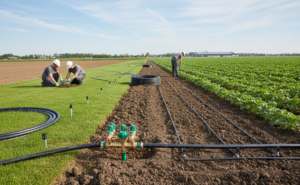
Drip irrigation is a micro-irrigation method that delivers water directly to the plant root zone through a network of emitters, tubing, and valves. Water is applied slowly and consistently, allowing deep soil penetration with minimal evaporation or runoff.
This system is widely adopted in row crops, orchards, vineyards, greenhouses, and home gardens where precise water control is essential.
Key Characteristics of Drip Irrigation
Direct root-zone watering
Low operating pressure
High water-use efficiency
Reduced weed growth
Minimal evaporation loss
What Is Sprinkler Irrigation?
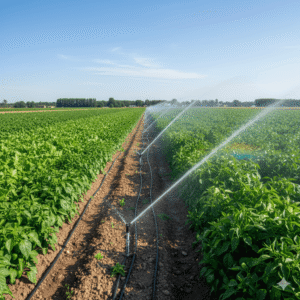
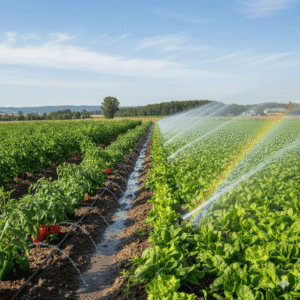
Sprinkler irrigation distributes water through pressurized pipes and sprays it into the air, simulating natural rainfall. Sprinklers can be fixed, rotating, oscillating, or traveling, making them adaptable to a wide range of landscapes.
This system is commonly used for lawns, turf grass, pastureland, and large open fields where broad coverage is required.
Key Characteristics of Sprinkler Irrigation
Wide area coverage
Moderate to high operating pressure
Above-ground water distribution
Flexible layout options
Faster installation for large spaces
Water Efficiency and Conservation
Water efficiency is one of the most critical factors when comparing drip vs sprinkler irrigation.
Drip irrigation systems achieve up to 90–95% water efficiency, as water is delivered directly to plant roots. Evaporation, runoff, and overspray losses are significantly reduced, making drip irrigation ideal for regions facing water scarcity or usage restrictions.
Sprinkler irrigation systems, by contrast, typically operate at 65–75% efficiency. Water loss occurs due to wind drift, evaporation, and uneven distribution, particularly in hot or windy climates.
Winner for water conservation: Drip Irrigation
Impact on Crop Health and Yield
Plant health depends on consistent soil moisture and minimal stress.
With drip irrigation, soil moisture levels remain stable, reducing plant shock and preventing fungal diseases caused by wet foliage. Roots grow deeper and stronger, improving nutrient uptake and overall crop resilience.
Sprinkler irrigation wets foliage and soil surface simultaneously. While effective for certain crops, frequent leaf wetness can increase the risk of fungal infections, mold, and leaf burn, especially when irrigation is poorly timed.
Winner for crop health and yield optimization: Drip Irrigation
Installation Complexity and System Design
Installation requirements differ significantly between the two systems.
Drip irrigation systems require careful planning. Tubing must be laid precisely, emitters must be spaced according to plant needs, and filtration systems are essential to prevent clogging. Initial setup can be more labor-intensive, particularly for large farms.
Sprinkler irrigation systems are generally faster to install. Above-ground sprinklers or buried pop-up systems cover wide areas with fewer components, making them appealing for lawns and expansive landscapes.
Winner for installation simplicity: Sprinkler Irrigation
Maintenance and Long-Term Reliability
Maintenance affects operational costs and system longevity.
Drip irrigation requires periodic inspection of emitters, filters, and lines. Clogging can occur if water quality is poor or filtration is inadequate. However, modern systems from RGB Irrigation are engineered with advanced filtration and pressure regulation to minimize maintenance demands.
Sprinkler irrigation systems face wear from moving parts, pressure fluctuations, and environmental exposure. Sprinkler heads can clog, break, or misalign, leading to uneven watering and higher repair frequency.
Winner for long-term reliability with proper management: Drip Irrigation
Energy Consumption and Operating Costs
Energy usage directly impacts irrigation costs.
Drip irrigation systems operate at lower pressure, reducing energy consumption and pumping costs. Over time, this results in significant savings, especially for large-scale agricultural operations.
Sprinkler irrigation systems require higher pressure to distribute water evenly, increasing energy demand. This can lead to higher monthly operating expenses, particularly in systems running multiple cycles per day.
Winner for energy efficiency and cost control: Drip Irrigation
Soil Compatibility and Erosion Control
Soil type plays a major role in irrigation performance.
Drip irrigation works exceptionally well in sandy, loamy, and clay soils by allowing water to infiltrate slowly. This prevents surface runoff and soil erosion while maintaining optimal moisture balance.
Sprinkler irrigation, when used on compacted or sloped soils, can cause runoff and erosion if application rates exceed soil absorption capacity.
Winner for soil preservation: Drip Irrigation
Best Applications for Each System
When Drip Irrigation Is the Best Choice
Vegetable gardens and raised beds
Orchards and vineyards
Greenhouses and nurseries
Row crops and specialty farming
Water-restricted regions
When Sprinkler Irrigation Is the Best Choice
Lawns and turf areas
Pasture and forage crops
Large open fields
Areas requiring quick coverage
Scalability and Automation Options
Both systems can be automated, but drip irrigation offers superior precision.
Modern drip irrigation systems integrate seamlessly with smart controllers, soil moisture sensors, and fertigation units, allowing exact control over water and nutrient delivery.
Sprinkler irrigation also supports automation, but environmental factors such as wind and temperature introduce variability that limits precision.
Winner for scalable precision agriculture: Drip Irrigation
Cost Comparison: Short-Term vs Long-Term Value
Initial costs for drip irrigation are often higher due to components and installation labor. However, reduced water usage, lower energy costs, and increased yields deliver a strong return on investment.
Sprinkler irrigation systems generally have lower upfront costs but higher long-term operating expenses due to water waste, energy consumption, and maintenance.
Winner for long-term value: Drip Irrigation
Final Verdict: Drip or Sprinkler Irrigation?
When evaluating drip vs sprinkler irrigation, the answer depends on application goals. For precision, water efficiency, crop health, and sustainability, drip irrigation consistently outperforms sprinkler systems. For broad coverage and rapid installation in turf or pasture environments, sprinkler irrigation remains a practical solution.
At RGB Irrigation, we design and implement irrigation systems that align with land conditions, crop requirements, and performance objectives. The right system is not just about watering plants—it is about maximizing efficiency, protecting resources, and driving long-term success.